PKColumns

Friday, October 2, 2009

The Pakistan Navy has acquired Anti-Submarine Warfare (ASW) helicopters Z9EC from China. 

The induction ceremony was held here on Wednesday at Naval Aviation Base. Chief of the Naval Staff Admiral Noman Bashir was the chief guest on the occasion. This is the first batch of the series of six helicopters to be procured as per the contract signed with China National Aero Technology Import and Export Corporation (CATIC). 

Z9EC helicopters have been built according to the specific requirements of Pakistan Navy and are capable to detect and destroy submarines. The aircraft is configured to carry torpedoes and is fitted with state of the art Pulse Compression Radar, Low Frequency Dipping Sonar, Radar Warning Receiver and Doppler Navigation System.

Talking to the mediamen after inauguration, the Naval Chief said that these days the Indian Ocean is experiencing intense activity and around 100 ships from different countries are operating at all times for safeguarding their interests. These extraordinary developments are an indicator of the importance of the trade routes in these waters. Pakistan Navy is also conducting continuous deployment of ships and aircraft to guarantee guarding our maritime interests.

Commenting on the regional stability, he denied being part of any arms race but expressed resolve to maintain quality in naval platforms and enhancement of capabilities in consonance with the developments in the region. He also expressed his full confidence in Chinese technology and termed it compatible to Western. “Pak-China relationship is time-tested and would further be strengthened with such defence collaborations like F-22 P frigates and Z9EC helicopters projects,” he added. Earlier in his welcome address, Commander Pakistan Fleet Rear Admiral Asif Sandila highlighted salient features of Z9EC project. 

He apprised that apart from China, Pakistan is the first country that would operating these helicopters in Anti Submarine Warfare role. Later, the helicopter made fly and staged demonstration of its characteristics and maneuverability. The ceremony was attended by the Chinese Ambassador to Pakistan Luo Zhao Hui, representatives of M/s CATIC and a large number of senior naval officers and Aviators of Pakistan Navy.

Thursday, October 1, 2009

Quetta:US new concern

The United States has now turned its focus to Quetta, claiming that it has now become a major Taliban base from where Mullah Omar and his commanders plan and launch cross-border strikes into Afghanistan.


On Tuesday, The Washington Post quoted US Ambassador to Pakistan Anne W. Patterson as saying that Quetta was high on Washington’s list of terrorist bases in the region.


‘In the past, we focussed on Al Qaeda because they were a threat to us. The Quetta Shura mattered less to us because we had no troops in the region,’ she said. ‘Now our troops are there on the other side of the border, and the Quetta Shura is high onWashington’s list.’


Gen Stanley A. McChrystal, the top US and Nato commander in Afghanistan, has also raised alarms about the Quetta Shura, describing it in his recent report to President Barack Obama as a major command centre for the widening wave of Taliban bombings and attacks.


Other US officials claim that virtually all of the Afghan Taliban’s strategic decisions are made by the Quetta Shura. Decisions flow from the group ‘to Taliban field commanders, who in turn make tactical decisions that support the Shura’s strategic direction,’ one such official told the US media.


Ambassador Patterson acknowledged that the United States is far less familiar with the vast desert region than with Fata, where it has been cooperating closely with Pakistan for several years in the hunt for Al Qaeda and Taliban leaders and where it periodically kills insurgents with missiles fired from remotely piloted aircraft.


‘Our intelligence on Quetta is vastly less. We have no people there, no cross-border operations, no Predators,’ the ambassador said.


She said Pakistani officials were growing ‘extremely nervous’ that the current policy disputes in Washington would lead to a premature US pullout from Afghanistan. ‘They will not rush to cut ties with the Taliban if they think they will be back in charge there again,’ she said.


Although the media have often quoted unnamed US officials as expressing doubts onPakistan’s sincerity to fight the Quetta Taliban, this marks the first time a senior US official has publicly endorsed such claims.


Pakistan’s chief military spokesman, Maj-Gen Athar Abbas, however, rejected such claims as incorrect.


‘From our judgment, there are no Taliban in Balochistan,’ he said. Asked about the names of Quetta Shura leaders provided by Afghan and US officials, he said: ‘Six to 10 of them have been killed, two are in Afghanistan, and two are insignificant. When people call Mullah Omar, the mayor of Quetta, that is incorrect.’


The Post report quoted Pakistani analysts as saying that the Taliban’s presence in theQuetta region is more discreet than it was earlier in the decade, when Mullah Omar fled there from US and Afghan military attacks. He was joined by thousands of fighters, who blended into ethnic Pashtun neighbourhoods and refugee camps. The report claims that Pakistani officials have allowed the Taliban movement to regroup in the Quetta area because they view it as a strategic asset rather than a domestic threat.


Michael Semple, a former UN official in Afghanistan now based in Islamabad, told the Post that the Quetta region’s refugee camps were ‘a great reserve army’ for the Taliban. He said Pashtun tribes in the Kandahar region of Afghanistan, the Taliban’s ethnic and spiritual base, have strong ties with those on the Pakistan side.


During Ramazan, posters appeared on walls across Quetta, asking people to contribute their money, vehicles and sons to the ‘fight against occupying forces’ across the border inAfghanistan.


Experts who spoke to the Post said unlike Pakistani Taliban groups in Fata, the Quetta Shura is considered uninterested in operations inside Pakistan.


Maj-Gen Abbas, however, rejected the suggestion that because the Quetta Taliban were not attacking Pakistani targets, Pakistan was not interested in combating them.


He said he hoped the Swat campaign had overcome any concerns Washington might have about Pakistan’s willingness to take on the insurgents. If the United States has information about Taliban leaders in Balochistan, ‘tell us who and where they are,’ he said. ‘We will not allow your forces inside, but if you lead, we will follow.’


But Ambassador Patterson said Pakistani officials had ‘made it crystal clear that they have different priorities from ours,’ being far more concerned about Taliban attacks insidePakistan than across the border. She noted that Pakistan had once trained religious fighters to operate against India and elsewhere and that the same groups had now turned against the state.


‘You cannot tolerate vipers in your bosom without getting bitten,’ Ambassador Patterson said. ‘Our concern is whether Pakistan really controls its territory. There are people who do not threaten Pakistan but who are extremely important to us.’

Tuesday, September 29, 2009

Judge delays Google's Digital Library

A New York judge has put Google's vision of creating the world's biggest digital library on hold.

Judge Denny Chin postponed a fairness hearing set for next month that was meant to address a settlement between Google and authors and publishers.

The $125m agreement, worked out last year, has effectively been sent back to the drawing board by the judge.

The class action case would let Google distribute and sell digital versions of out of print, copyrighted books.

It has been criticised because some say it would give Google too much power to set book prices.

Judge Chin's decision comes after the American Association of Publishers and the Authors Guild asked the court to delay the final fairness hearing on the proposed agreement, which needs court approval to go ahead.

The $125m agreement, worked out last year, has effectively been sent back to the drawing board by the judge.

The class action case would let Google distribute and sell digital versions of out of print, copyrighted books.

It has been criticised because some say it would give Google too much power to set book prices.

Judge Chin's decision comes after the American Association of Publishers and the Authors Guild asked the court to delay the final fairness hearing on the proposed agreement, which needs court approval to go ahead.


Fair concerns'

The move follows objections filed by the Department of Justice last week. It said the deal should not go through in its current form.

In a 32-page filing, the DOJ said the settlement needed to be reworked so that it complied with US copyright and antitrust laws.

It was revealed earlier this week that publishers, authors and Google have been working to modify the agreement, which was completed last year.

"Under all the circumstances, it makes no sense to conduct a hearing on the fairness and reasonableness of the current settlement agreement, as it does not appear that the current settlement will be the operative one," Judge Chin wrote.

He noted that objectors to the settlement include "countries, states, non-profit organisations, and prominent authors and law professors".

"Clearly, fair concerns have been raised. It would appear that if a fair and reasonable settlement can be struck, the public would benefit," said Judge Chin.

'Status conference'

In 2001, book authors and the Authors Guild filed a class-action lawsuit, as did publishers, alleging that Google had violated copyright laws by scanning books from the libraries of major universities without always getting permission from the copyright owners of the books.

Google claimed at the time it was protected by the "fair use" principle because its book search engine showed only short snippets of text for the books it had scanned without permission.

Microsoft, Amazon and Yahoo have filed objections to the settlement with the court, along with the French and German governments, privacy advocates and consumer watchdog groups.

"Clearly voices such as ours had an impact on Judge Chin," wrote consumer watchdog advocate John Simpson in an email to BBC News.

"There was no way the proposed settlement could go forward. We believe that the proper place to solve many of the case's thorniest problems, such as that of orphan books, is in Congress because it is important to build digital libraries."

Orphan books - of which there are thought to be five million - are titles where the authors cannot be found.

Judge Chin has called for a "status conference" to be held on 7 October - the original date for the hearing - to determine "how to proceed with the case as expeditiously as possible".

Friday, September 25, 2009

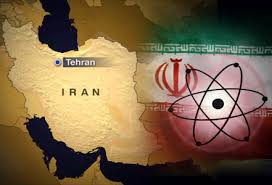
Iran 'concealed nuclear facility'

Iran concealed a partially-built second uranium enrichment plant in defiance of calls for transparency over its nuclear plans, US President Barack Obama says.

The US, UK and France said the UN had to be given immediate access and urged tough new sanctions, while Russia also said it was "seriously concerned".

Iran told the UN about the plant on Monday, saying it was not operational yet and would provide nuclear energy.

Speaking in New York, Iran's president denied there had been any secrecy.

In an interview with Time magazine, Mahmoud Ahmadinejad said Iran was working within the framework set out by the International Atomic Energy Agency (IAEA), the UN watchdog.

Tehran has previously acknowledged it has one enrichment plant, at Natanz.

Iran's decision to build a secret facility represented a "direct challenge to the basic compact" of the global non-proliferation regime, US President Barack Obama said, making a statement in Pittsburgh, where he is hosting a G20 summit.

Despite Iran's assertions that the facility was for peaceful purposes, the new plant was "not consistent" with that goal, the US president said.

'Line in the sand'

Speaking alongside UK Prime Minister Gordon Brown and French President Nicolas Sarkozy, Mr Obama said it was time for Iran to begin meeting its international commitments.

"Iran must comply with UN Security Council resolutions and make clear it is prepared to meet its responsibilities as a member of the community of nations," Mr Obama said.

Tehran would be held accountable for any failure to meet these responsibilities, he said.

Speaking after Mr Obama, the French and British leaders used strong language to insist that Iran would now have to disclose full details of its entire nuclear programme or face new and tougher sanctions.

Gordon Brown stressed that the US, France and UK were "at one" on the issue, and accused the Iranians of "serial deception".

There was now "no choice but to draw a line in the sand" over the nuclear issue, he said.

"Iran must abandon any military ambitions for its nuclear programme."

Mr Sarkozy said the situation was a challenge to the entire international community.

"Everything must be put on the table," the French president said, adding that the world needed to see a "step change" from Iran in the coming months.

Russian President Dmitry Medvedev, informed of the plant's existence by Mr Obama this week, said the second plant was against the requirements of UN Security Council resolutions.

Iran must co-operate fully with the IAEA, Mr Medvedev said.

China also said Iran should work with the UN watchdog, a foreign ministry spokesman said in Pittsburgh.

Underground plant

Iranian officials were quick to deny the latest plant was any kind of clandestine project.

"This installation is not a secret one, which is why we announced its existence to the IAEA [International Atomic Energy Agency]," Ali Akbar Saleri, head of Iran's nuclear agency, told the AFP news agency.

Iran says it does not need to inform the IAEA of any new site until 180 days before any nuclear material is place in the facility.

The existence of Iran's first enrichment plant, at Natanz, was only confirmed after intelligence emerged from Iranian exile groups several years ago.

Western governments are said to have known of the existence of the new enrichment plant for some time. Mr Obama was first told about it during the "transition" period before he took office in January, officials say.

In Washington, US officials said the Western nations decided to reveal their intelligence assessments when the Iranians realised the plant's secrecy was compromised.

The new facility is said to be underground at a mountain on the site of a former missile site belonging to the Iranian Revolutionary Guards, north-east of the holy city of Qom.

Construction on the facility - believed by the US to be large enough to contain 3,000 centrifuges, not large enough for commercial work - started in earnest in mid-2006, diplomatic sources said.

Iran's letter to the UN watchdog, the IAEA, on Monday informed it that "a new pilot fuel enrichment plant is under construction".

Iran told the agency that no nuclear material had been introduced into the plant, and enrichment levels would only be high enough to make nuclear fuel, not a bomb.

In response, the IAEA has requested Iran to "provide specific information and access to the facility as soon as possible", an IAEA statement adds.

The disclosure of the new plant comes one day after world leaders stressed the need for greater co-operation against nuclear proliferation and shortly before Iran is due to resume talks with international powers on the issue.

Since taking office in January, Mr Obama has told Tehran than he is ready for direct talks on the nuclear issue, but has had no firm response from Iran.

Earlier this month, Tehran agreed to "comprehensive" talks on a range of security issues - but made no mention of its own nuclear programme.

The talks are due to be held in Geneva on 1 October with Tehran and the five permanent UN Security Council members - US, UK, Russia, China and France - plus Germany.


Exclusive Report on BlackWater/Xe

An indepth report on the origins of BlackWater, the infamous US Private Military Company that is under US Congress Investigation for murder of Iraqi civilians.

Its origin, track record in Iraq and Afghanistan and the controversies surrounding it, and most importantly, their presence in Pakistan and what it means for us.

Read the complete Story here ...

Tuesday, September 15, 2009

Afridi, Gul nominated for ‘T 20 best performance of the year’

The ICC has short listed the nominations for the annual awards here on Tuesday.

From Pakistan, Saeed Ajmal and Sana Mir have been dropped from the list while Shahid Afridi and Umar Gul has been included in the list for Twenty20 cricket only whereas he was dropped from the ODI list.


The selection panel of the International Cricket Council (ICC) has short listed the long list which was earlier announced for the ICC Awards 2008 and 2009.

Name of any Pakistani cricketer was already not included in the lists of ‘Player of the Year’ and ‘Test Player of the Year’ while the name of fast bowler Umar Gul was excluded from the One-day list and Saeed Ajmal from the list of Twenty20 cricket.

Pakistan’s Sana Mir has also been excluded from the list of ‘Women’s Player of the Year’.

However, names of Shahid Afridi and Umar Gul remained included in the Twenty20 list along with Tillekaratne Dilshan of Sri Lanka and Chris Gayle of the West Indies.

Umpires list has also been short listed and only four umpires were nominated. This list also includes two umpires from Pakistan – Aleem Dar and Asad Rauf.

The ICC Award ceremony will be held on October 1 during the Champions Trophy in South Africa.

Monday, September 14, 2009

Musharraf resigned after a deal: President Zardari

President Asif Ali Zardari has said that he participated in the talks which led to the safe exit of former president Pervez Musharraf.

Speaking at an Iftar-dinner hosted at the Presidency for media representatitives, the President said the local officials and foreign forces were part of the deal under which former president was provided a safe passage.


To a question, he said two international forces who have interests in this region acted as guarantors during talks for providing safe passage to Pervez Musharraf.

“All the stakeholders were on same page at the time of making the decision on providing safe exit to the former president Pervez Musharraf,” he said adding “it was unanimously decided that now he (Pervez Musharraf) will play golf.” 

Regarding corruption charges, President Zardari said all the ‘stories of corruption’ are part of a campaign of maligning the politicians.

Zardari also suggested constituting of a ‘truth and reconciliation commission’ to sort-out the facts about Musharraf’s safe exit, and said Human Rights Commission of Pakistan (HRCP) Chairwoman Asma Jahangir should be its head.

The President exchanged views on the overall political situation in the country, his forthcoming visit to the United States, government’s successes in the war against terrorism as well as the issues of national importance.

He said no minus-one formula can meet success in the absence of a president like Farooq Leghari.